

How to Care for Braids in Autumn and Winter: A Glasgow Braider’s Guide

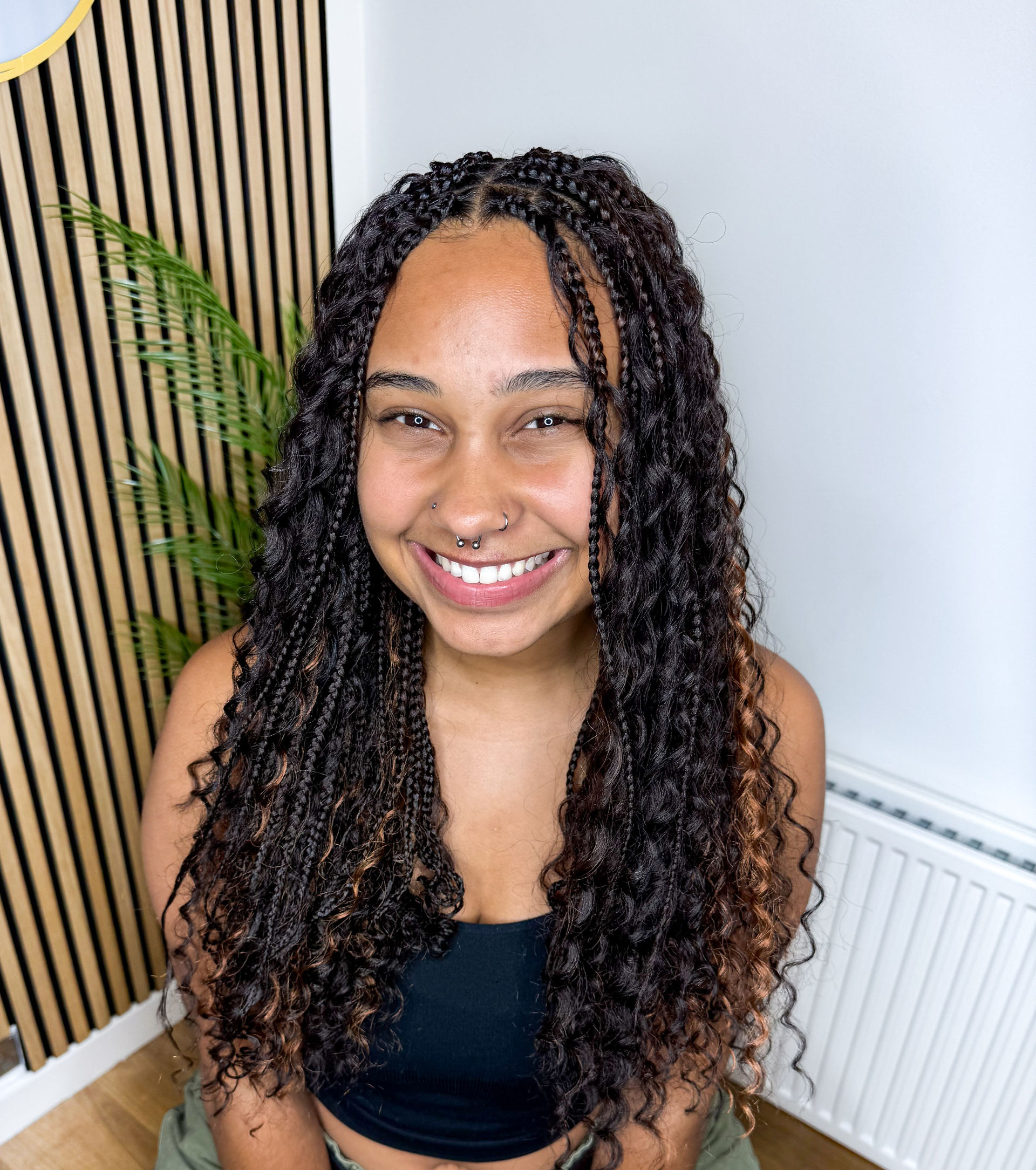
Brown and auburn box braids with boho curls 
Long box braids with boho curls in a mixed brown and auburn colour blend 
Long box braids with boho curls in a mixed brown and auburn colour blend
Autumn and winter can be a brilliant time to wear braids.
They reduce daily styling, work beautifully with busy routines and can keep your natural hair tucked away during colder weather.
But colder temperatures, central heating, hats, scarves and coat collars can all affect how your braids and scalp feel.
At Beauty Splendour, our women and children’s braiding salon in Bishopbriggs, Glasgow, I encourage clients to keep braid care simple.
If you’re wondering how to care for braids in autumn and winter, the key is to keep your routine simple: protect your scalp, reduce friction, avoid unnecessary build-up and know when it’s time to remove your style.
Why Braids Need Extra Care in Autumn and Winter
During colder months, your hair is exposed to different conditions.
Indoor heating can leave your scalp feeling drier, while wool hats, scarves and high coat collars can repeatedly rub against your braids.
That friction can create frizz, particularly around the nape and sides of the hair.
A few small changes to your routine can help your style stay looking better for longer.
How to Keep Your Scalp Clean and Comfortable
Having braids does not mean forgetting about the hair underneath.
Your scalp can still collect sweat, product and natural oils, so gently cleansing it when needed is important.
You also do not need to cover your scalp in heavy oils every day.
If you use moisturising or scalp products, choose something suitable for your hair and use it sparingly. Too much product can simply create more build-up around your roots.
Persistent soreness, irritation or unusual discomfort should not simply be covered with more product.
Your scalp should feel comfortable while you wear your braids.

Auburn box braids with soft boho curls blended throughout the hairstyle 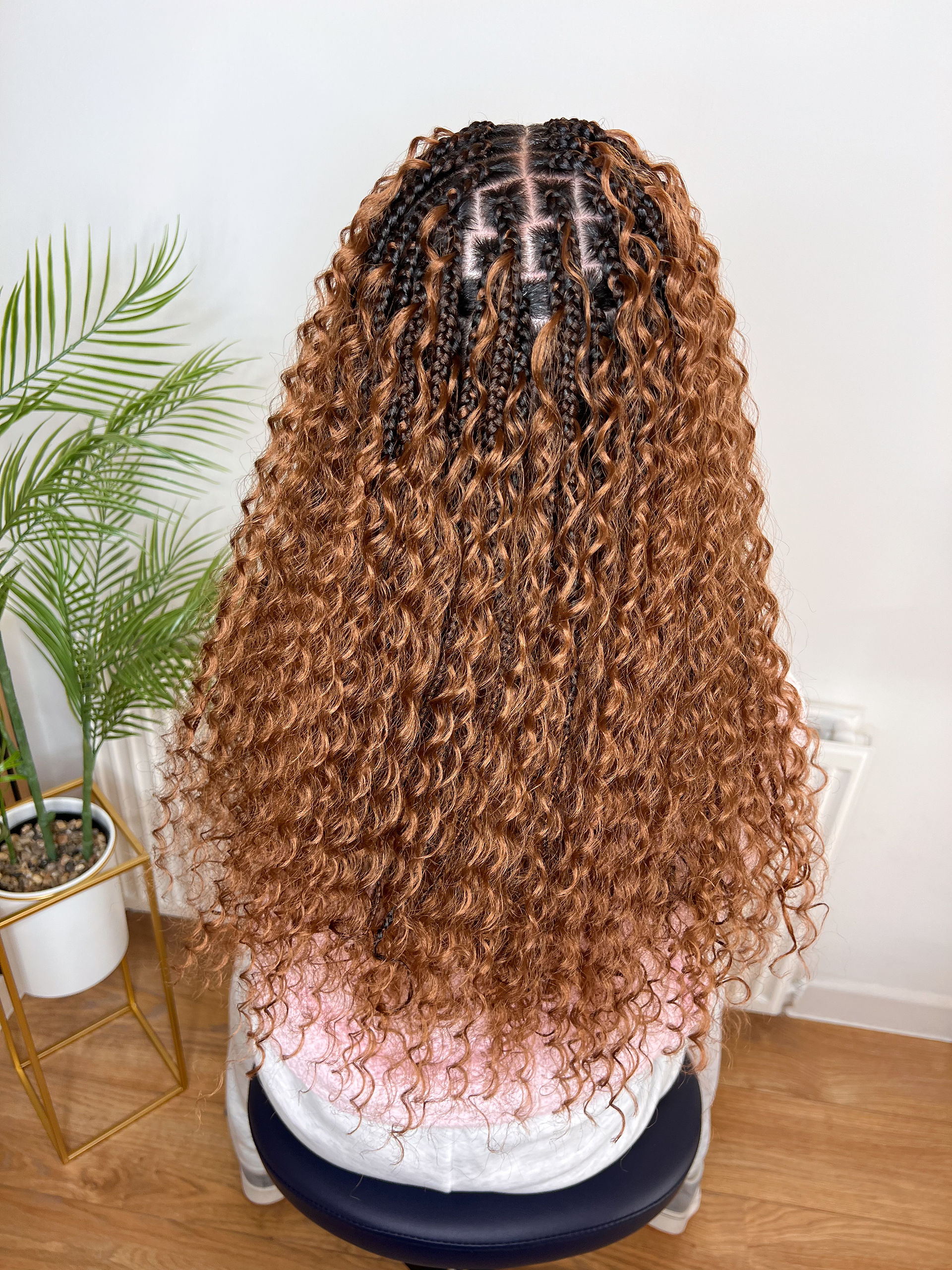
Auburn box braids with soft boho curls blended throughout the hairstyle 
Auburn box braids with soft boho curls blended throughout the hairstyle
How to Protect Braids From Hats, Scarves and Friction
Autumn means hats. Winter means scarves and both can create friction against your braids. Where possible, choose hats with smooth or satin linings and be mindful of rough fabrics constantly rubbing against the same areas of your hair.
Night-time protection matters too.
A satin bonnet, scarf or pillowcase can help reduce friction while you sleep and keep your braids looking neater. If your braids are long, gather them loosely rather than pulling them into a tight style overnight.
When to give Your Hairline a Break
Your hairstyle should not place unnecessary pressure on your edges.
Avoid constantly pulling your braids into very tight ponytails or buns, particularly around the hairline. This is especially important if your natural hair is fine or your edges are more delicate.
At Beauty Splendour, I consider your hair density, hairline, scalp sensitivity and extension weight when recommending a style.
Beautiful braids should not require unnecessary tension.

When Is It Time to Take Your Braids Out?
A protective style does not become more protective simply because you keep it in for longer.
As your natural hair grows, shed hair, product and new growth collect around the roots. You may notice that it is time for removal when there is significant regrowth, heavy build-up, matting, excessive frizz or the hairstyle becomes uncomfortable or difficult to manage.
Some long-term styles may comfortably last several weeks, but there is no prize for keeping your braids in longer than your hair needs.
Listen to your hair and scalp.

How To Take Your Time During Removal
Braid care does not end until the style has been safely removed.
Take your time when undoing your braids and gently detangle your natural hair afterwards. Seeing shed hair during removal can be completely normal because hair that would ordinarily shed each day has been held within the braided style.
After removal, cleanse, condition and assess how your hair feels before deciding what comes next. Your next appointment does not necessarily need to repeat your previous style.
You might choose a lighter length, a different braid size, less extension hair or simply a completely new look.
Choosing the Right Braids for Autumn and Winter
There is no single perfect winter hairstyle.
Box braids, knotless braids, crochet, cornrows and boho styles can all work beautifully depending on your natural hair, lifestyle and preferred level of maintenance.
Before booking, think about how long you want to wear the style, how much maintenance you are comfortable with and whether the length and weight make sense for your hair.
Autumn is also a beautiful time to experiment with colour. Rich brown, auburn, burgundy and subtle ombré blends can give your usual braids a completely different feel without dramatically changing the style itself.

Knotless braids in brown and auburn with human hair curls for a soft boho finish 
Knotless braids in brown and auburn with human hair curls for a soft boho finish 
Knotless braids in brown and auburn with human hair curls for a soft boho finish
Your Quick Autumn and Winter Braid-Care Checklist
Keep your scalp clean and avoid excessive product build-up.
Protect braids from rough hats, scarves and bedding.
Avoid repeatedly pulling your hairline into tight styles.
Pay attention to your scalp rather than trying to keep a style in for a certain number of weeks.
Take your time during removal and care for your natural hair before your next installation.
Simple really does work.
Looking for Braids in Glasgow This Autumn or Winter?
Beauty Splendour is a women and children’s braiding salon in Bishopbriggs, Glasgow, specialising in personalised, tension-conscious braiding and protective styling.
Whether you are considering box braids, knotless braids, crochet, boho braids or something completely different, your natural hair, comfort and lifestyle are considered before your style is recommended. If you already know you will want fresh braids for November or December, booking ahead also gives you a better choice of appointment dates.
Ready for your next style?
Not sure what is suitable for your hair?
Beautiful braids should not only look good on installation day.
They should work with your hair throughout the time you wear them.
With love,
Promise
Beauty Splendour
Women & Children’s Braiding Salon
Bishopbriggs, Glasgow


Comments